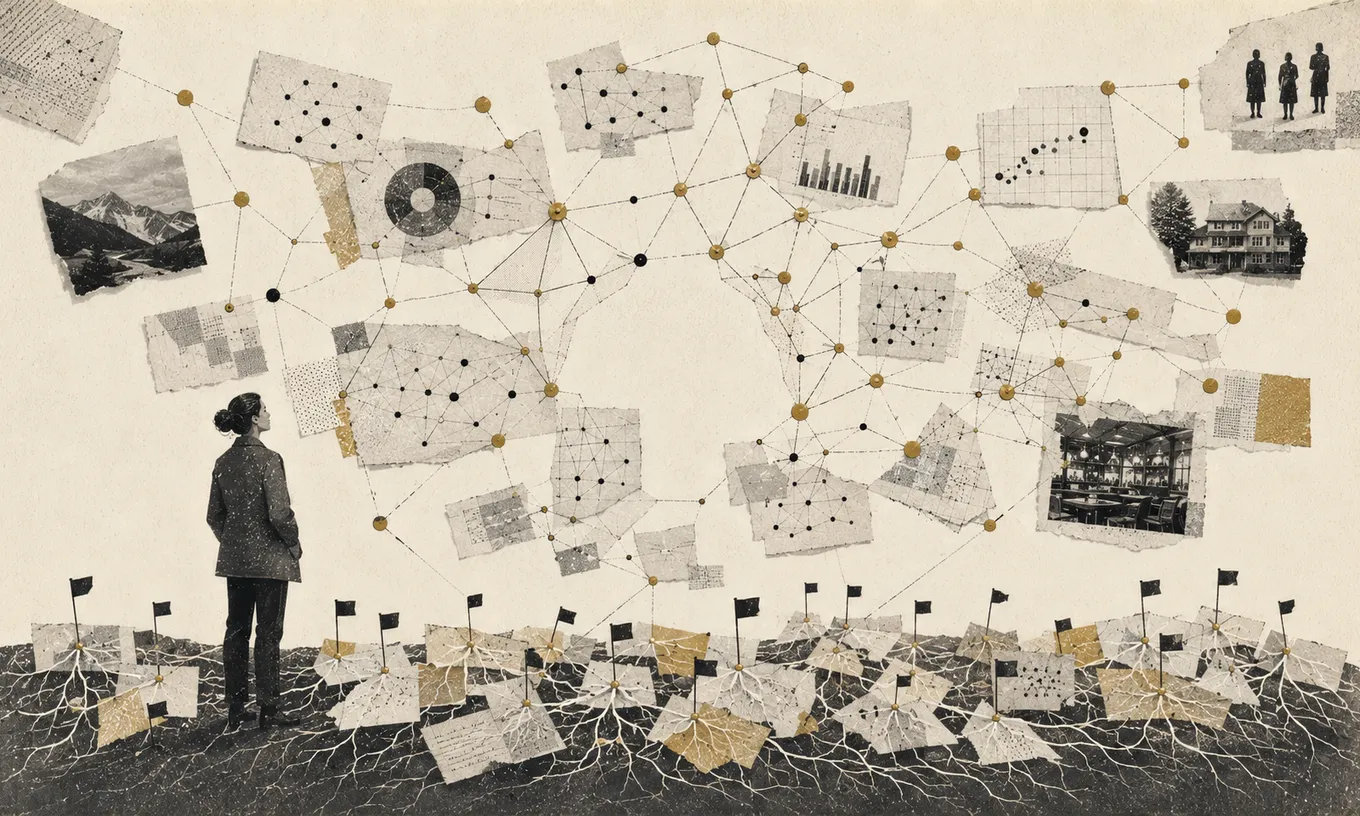
From Review Flags to Review Intelligence: Why Structure Changes What MLR Teams Can Learn
Most MLR teams know the feeling: a material returns with a dozen review comments, the team resolves them, and the workflow moves on.
The material may be corrected. But has the organization learned anything?
Not necessarily. When review findings remain isolated comments, teams can see what was wrong in one document without seeing whether the same issue is recurring, where it originates, or what should change upstream.
That is the difference between a review record and review intelligence.
A list of flags helps correct one material. A structured pattern can help improve the system that produced it.
Understanding begins with the question, not the answer
Reflecting on AI-assisted work, Andrej Karpathy offered a useful distinction: "You can outsource your thinking, but you can't outsource your understanding." His point was not that AI cannot reason. It was that a person still needs enough context to know what should be built, why it matters, and how to direct the work.
The distinction is especially relevant in MLR operations.
AI can assist defined tasks such as locating claims, comparing content with controlled sources, checking required elements, organizing review history, and drafting an explanation. These activities can reduce the effort required to inspect a material.
But a system does not inherit the organization's purpose merely because it can process the organization's information. Someone still needs to decide:
- which recurring signals matter;
- whether they indicate a real control weakness or a change in content mix;
- what level of risk warrants intervention; and
- whether the right response is training, source governance, template redesign, workflow change, or no action at all.
That is where information becomes operational understanding.
The same 12 flags can tell three different stories
Consider an illustrative set of 12 findings from one medical content material. No customer result or performance claim is implied.
Presented as a list, the findings tell the content owner what to fix. Grouped by review point and risk tier, they may suggest that one type of evidence mismatch appears repeatedly. Connected to material type, source version, team, market, reviewer action, and later outcome, they can support a more useful question: is this recurrence caused by unclear guidance, fragmented source access, a template problem, a training need, or simply the composition of this small sample?
| View of the same findings | Question it can answer | Likely action |
|---|---|---|
| Issue list | What should be corrected in this material? | Revise and resubmit |
| Structured pattern | Which review points recur, and where? | Investigate a possible process weakness |
| Traceable learning record | Why might the pattern exist, and did an intervention change it? | Test, govern, and measure an improvement |
The data did not become more valuable because it became larger. It became more useful because its relationships became visible.
Four layers turn review output into an inspectable signal
Review intelligence does not begin with a dashboard. It begins with a record that preserves enough structure to be interpreted later.
1. Locate the exact review object
A finding should identify the page, object, claim, chart, footnote, reference, or required element involved. A generic comment such as "evidence issue" is difficult to compare across materials.
2. Connect the governing context
The record should link the finding to the relevant source passage, approved claim, product information, SOP, market rule, and version in effect at the time. Without this context, two apparently similar findings may represent different problems.
3. Classify the review event
Useful fields may include review point, material type, audience, market, severity, uncertainty, owner, system recommendation, reviewer action, and reason for an override. Categories should serve a decision, not merely create more metadata.
4. Aggregate with the right denominator
Counts alone can mislead. Ten citation findings in 1,000 claim-bearing objects are different from ten in 20. Results should be segmented by relevant exposure: materials, claims, pages, object types, teams, markets, or review periods.
These four layers make a pattern observable. They do not determine what the pattern means.
A pattern is a question, not a conclusion
Suppose one claim category receives more high-risk flags this quarter. It is tempting to conclude that the content team misunderstands the rule.
Other explanations may be equally plausible:
- the team produced more materials containing that claim category;
- a product information or approved-claim version changed;
- a new template made qualifiers less visible;
- reviewers applied the category inconsistently;
- the review rule or model threshold changed; or
- the apparent signal is too small to distinguish from ordinary variation.
This is why structured output does not eliminate judgment. It creates better questions for judgment.
Qualified experts bring scientific context, current policy, audience understanding, review precedent, and knowledge of how the workflow actually operates. They decide whether the signal is material, which explanation deserves testing, and what intervention is proportionate.
AI-assisted systems can organize the signals. Accountable experts determine what the pattern means and what should change.
From review history to a governed learning loop
Organizations often describe historical review data as a "flywheel." The metaphor is attractive, but it can imply that more data should automatically improve the system. In a high-stakes workflow, that is unsafe.
A reviewer override, for example, is not automatically proof that the system was wrong. The source may have been missing. The SOP may have been ambiguous. The reviewer may have applied a legitimate exception. The policy may have changed. Or the human decision itself may warrant adjudication.
A more useful model is a governed learning loop:
- Observe: capture structured, traceable findings and outcomes.
- Interpret: have qualified owners test alternative explanations.
- Intervene: choose a controlled response—such as guidance clarification, training, template revision, source cleanup, or rule adjustment.
- Measure: compare the relevant rate and error pattern after the change.
- Govern: document the decision, version, owner, and rollback path.
This loop turns review activity into organizational learning without treating every historical decision as permanent truth.
What remains a human responsibility
The most durable human role is not manually repeating every check. It is owning the decisions that give the checks meaning.
Define the objective
Is the priority to reduce a particular high-risk omission, improve evidence traceability, reduce avoidable rework, or make reviewer escalation more consistent? Different objectives require different structures and measures.
Judge materiality
Not every recurring issue deserves the same attention. Frequency, severity, detectability, audience impact, and downstream consequences must be considered together.
Interpret causes
Correlation across review records is a starting point. Experts must distinguish a content problem from a policy, data, workflow, reviewer, or system problem.
Choose the intervention
The correct response may occur upstream of review. A better source library, clearer approved language, redesigned template, or targeted training may be more useful than adding another automated rule.
In this division of labor, human expertise is not reduced to approving AI output. It becomes the mechanism that turns structured evidence into accountable change.
Questions to ask before building review intelligence
MLR and Digital teams can begin with practical questions:
- Can each important finding be traced to an exact object, source, rule, and version?
- Are review point and severity categories defined consistently enough to compare?
- Do records preserve uncertainty, reviewer actions, and reasons for overrides?
- Can results be segmented by material type, market, team, source version, and time period?
- Are rates calculated against an appropriate denominator rather than raw counts alone?
- Who is qualified to interpret a pattern and approve an intervention?
- How will the team test whether the intervention improved the intended outcome?
- Which changes require revalidation, change control, or rollback?
The goal is not to collect every possible field. It is to preserve the minimum context needed to support a real decision.
Where ZENO fits
ZENO is designed as an MLR pre-review layer for medical content materials before formal MLR approval.
It helps teams identify and locate potential review risks, connect findings to source evidence and company-specific review logic, explain why an issue was flagged, and route uncertain or material questions to the appropriate human reviewer.
When those findings preserve review object, evidence, rule, version, classification, and reviewer outcome, they can create the structured review record needed for responsible pattern analysis. ZENO does not replace the expert who interprets that pattern or owns the final decision. Its role is to make the underlying signal more visible, traceable, and useful.
The practical opportunity is not to outsource understanding. It is to give the people responsible for understanding a better structure to work with.
This article focuses on turning structured review signals into expert-led organizational learning. For specific implementation details, please through our official website.
Shadow AI in Medical Content Workflows: Why Policy Alone Is Not Enough
Blocking an unsanctioned AI tool does not remove the task that drove employees to it. Life sciences teams need an approved medical content workflow that is controlled, traceable, and practical enough to displace the shortcut.